
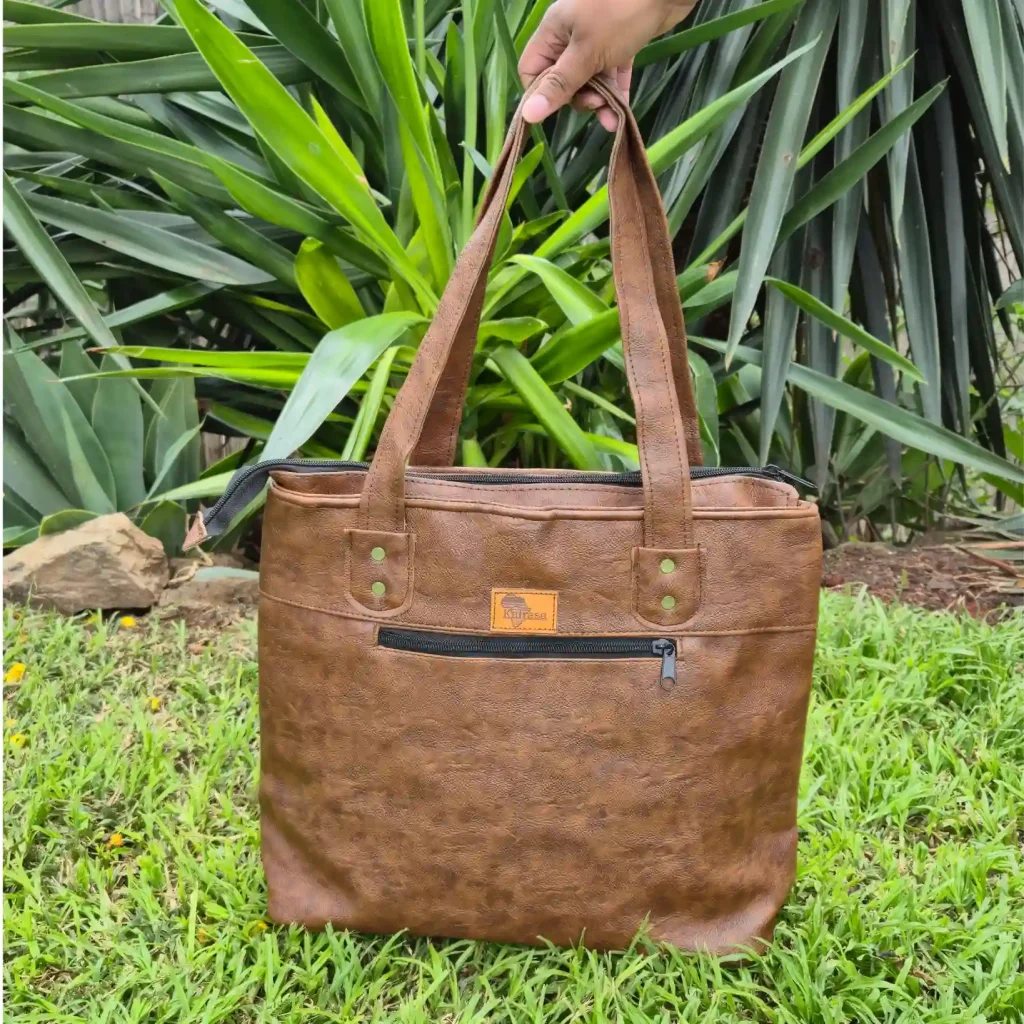
The art of customised bag crafting offers a refreshing alternative in this era dominated by mass-produced, factory-made accessories that often prioritise speed over quality. A custom-made bag is more than just a functional item for carrying laptops, workout clothes, or travel essentials. It is a tailored piece of functional art built to match your exact physical gear, aesthetic preferences, and daily routine. Nairobi has quietly emerged as a vibrant hub for artisanal craftsmanship, blending traditional hand-stitching techniques with modern functional design. From sleek synthetic leather corporate briefcases to rugged canvas weekend duffels and Ankara-accented totes, local artisans bring precision, cultural heritage, and structural integrity to every stitch. Understanding how a custom bag moves from an initial idea or sketch to a finished product gives you a deeper appreciation for the craft and helps you make informed choices when commissioning your next bespoke piece. This guide takes you behind the scenes of Kafrasa’s Nairobi workshop to explore the step-by-step journey of custom bag design and production.
The 6-Step Custom Bag Handcrafting Process
Transforming raw materials into a bespoke, durable bag involves six meticulous production stages:
-
Design & Specification Gathering: Translating the client’s device dimensions, pocket requirements, and style preferences into a production plan.
-
Material Selection & Quality Inspection: Choosing high-grade synthetic leather, heavy-duty canvas, or authentic African print fabrics and durable inner linings.
-
Pattern Drafting & Precision Cutting: Creating accurate physical templates and hand-cutting fabric panels to exact millimetre specifications.
-
Panel Preparation & Structural Reinforcement: Adding internal padding, rigid base boards, interfacings, and lining fabrics to ensure structural stability.
-
Precision Stitching & Hardware Assembly: Joining panels using industrial-grade bonded thread, heavy-duty zippers, and reinforced metal hardware anchors.
-
Final Quality Audit & Finishing: Inspecting stress points, trimming thread ends, cleaning surfaces, and testing zipper tracks before delivery.
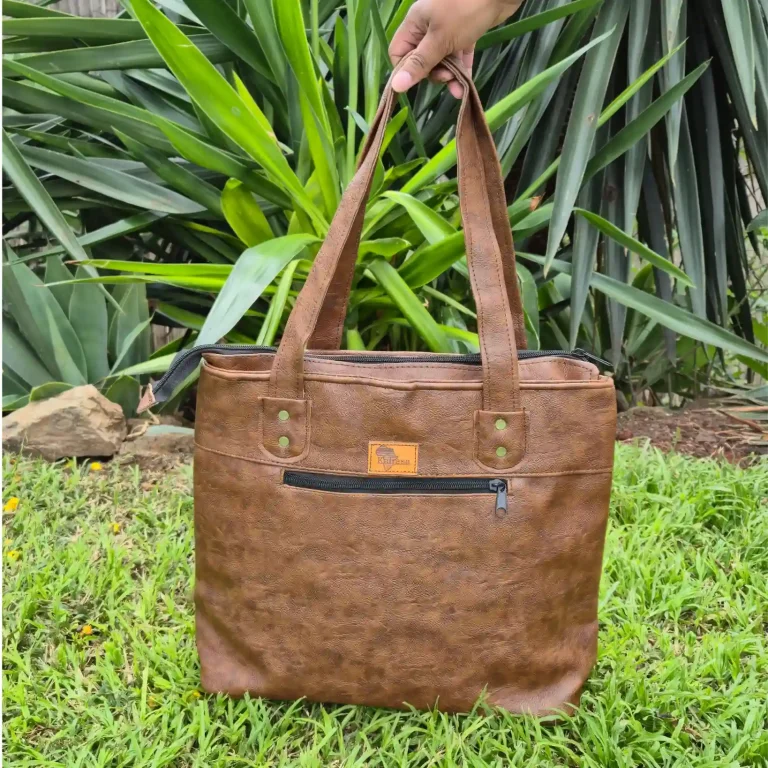
Standard vs. Custom Handcrafted Bags Comparison
Commissioning a custom bag provides distinct structural and practical advantages over purchasing mass-produced retail alternatives:
| Comparison Criteria | Mass-Produced Factory Bags | Kafrasa Custom Handcrafted Bags |
|---|---|---|
| Sizing & Fitting | Standardised, fixed dimensions; generic laptop sleeves | Tailored to fit exact laptop models, camera gear, or files |
| Material Quality | Thin synthetic films, plastic hardware, cheap foam padding | High-grade PU leather, heavy canvas, dense foam, metal hardware |
| Stitching & Durability | Single-stitched seams designed for high-speed output | Double-stitched stress points, box-stitched handle anchors |
| Internal Organisation | Generic open compartments; minimal specialised pockets | Custom pocket layouts for power banks, pens, flasks, and cables |
| Personalisation | None; identical to thousands of other mass-market bags | Monograms, custom colourways, Ankara print accents, bespoke sizes |
| Local Craft Impact | Global supply chains; minimal connection to local makers | Directly supports skilled Kenyan artisans and Nairobi workshops |
Step 1: Design Consultation and Specification Drafting
Every great custom bag begins with a conversation. Unlike off-the-shelf retail purchasing, bespoke crafting starts by identifying the exact functional problem the bag needs to solve for the client.
Key Design Elements Evaluated During Consultation
-
Primary Gear Dimensions: Measuring laptops, tablets, legal document folders, camera lenses, or water bottles to ensure tailored compartment clearances.
-
Carrying Ergonomics: Determining whether the client prefers crossbody straps, padded dual shoulder straps, or reinforced top grab handles based on their daily commute.
-
Internal Pocket Configuration: Mapping out specialised compartments for phone chargers, passports, grooming items, or keys so every item has a designated home.
-
Aesthetic & Material Preferences: Selecting primary exterior fabrics, accent trims, hardware finishes, and interior lining colours to reflect personal style.
By defining these specifications before cutting any fabric, our craftspeople ensure that the finished bag delivers zero wasted internal space and maximum practical utility.
Step 2: Material Selection and Quality Inspection
The longevity of any bag depends directly on the quality of its foundational raw materials. In our Nairobi workshop, every material undergoes rigorous manual inspection before entering the cutting room.
| Material Component | Selected Grade & Specs | Primary Functional Purpose |
|---|---|---|
| Exterior Fabrics | High-grade PU synthetic leather, heavy cotton canvas | Provides water resistance, abrasion defence, and visual polish |
| Accent Fabrics | Authentic African print (Ankara) cotton wax fabric | Delivers distinctive cultural style and visual contrast |
| Internal Linings | Wipeable synthetic nylon, water-resistant polyester | Protects main fabrics from internal spills and wipes clean easily |
| Hardware & Fasteners | Heavy-duty metal D-rings, swivel clips, moulded resin zips | Ensures handle anchors and zipper tracks withstand heavy loads |
| Internal Padding | High-density EVA foam sheeting | Shock protection for tech devices and structural shape retention |
Artisans examine synthetic leather rolls for surface uniformity, check canvas weave tension, and verify that African print fabrics exhibit rich, fade-resistant colour dyes. Hardware components are tested for smooth mechanical operation to eliminate hardware failure during daily use.
Step 3: Pattern Drafting and Precision Cutting
Once design specifications are locked in and materials pass inspection, master pattern makers translate the 3D bag design into flat 2D templates on heavy cardstock.
Precision in pattern drafting is essential. A millimetre discrepancy in panel dimensions can cause twisting along seam lines or uneven zipper alignment during final assembly.
The Precision Cutting Workflow
-
Template Alignment: Pattern pieces are placed strategically over raw materials, ensuring that fabric grains run true and patterned prints align aesthetically across outer pocket flaps.
-
Manual Hand Cutting: Craftsmen use razor-sharp rotary cutters and specialised shears to cut out each panel, guaranteeing crisp, unfrayed edges across synthetic leather, canvas, and lining sheets.
-
Component Grouping: Cut panels are bundled by sub-assembly zones—front face, rear panel, side gussets, base board, and internal pocket linings—ready for structural preparation.
Step 4: Structural Preparation and Internal Reinforcement
A frequent weakness in low-quality bags is structural slumping—when an empty bag collapses into a shapeless pile. Preventing this requires applying internal reinforcement layers before stitching panels together.
How the layers are built
- Outer shellSynthetic leather or heavy canvas
- Shock barrierHigh-density EVA foam padding
- Core stiffenerRigid Texon board or interfacing
- Inner protectionWipeable synthetic nylon lining
Adding Device Cushioning and Base Board Stiffening
For laptop chambers and travel duffels, high-density EVA foam sheeting is bonded to the reverse side of exterior panels. This padding acts as a shock absorber against everyday drops and bumps.
Additionally, a rigid Texon board or reinforced synthetic leather floor panel is inserted along the base of duffels and briefcases. This bottom panel prevents sagging when carrying heavy equipment, such as shoes, water bottles, or books.
Preparing Pockets and Zippers
Internal drop slots, zippered privacy pockets, and key lanyards are pre-assembled onto inner lining sheets before the bag’s main body is joined. Attaching pockets during this early phase guarantees clean interior seams with no loose threads or raw fabric edges exposed.
Step 5: Precision Stitching and Hardware Integration
Stitching is where loose fabric panels transform into a cohesive, heavy-duty bag. Artisans utilise heavy-duty industrial sewing machines equipped with thick, bonded nylon or polyester thread that resists fraying and moisture degradation.
Crucial Stitching Techniques Used in Our Nairobi Studio
-
Double-Stitched Seams: Primary load-bearing seams alongside gussets and bottom panels are stitched twice to prevent seam separation under heavy weight.
-
Box-and-Cross (X-Stitch) Handle Anchors: Top grab handles and shoulder strap mounting points are secured using box-stitch patterns, distributing tension across a wide surface area.
-
Piping and Edging Construction: Flexible vinyl or synthetic leather piping is sewn into perimeter seams, reinforcing bag corners against friction wear while giving the bag a sharp, structured silhouette.
Metal hardware components—including D-rings, swivel carabiner hooks, and strap adjustment sliders—are fitted into heavy-duty webbing loops and riveted firmly to structural anchor points.
Step 6: Final Quality Inspection, Cleaning, and Finishing
Before a completed custom bag leaves our Nairobi workshop, it undergoes a comprehensive multi-point quality assurance review.
-
Structural Stress Test: Handles and shoulder straps are pull-tested under simulated weight loads to confirm anchor strength.
-
Zipper Operation Check: All external and internal zippers are pulled back and forth multiple times to ensure smooth movement without snagging lining fabrics.
-
Thread Trimming & Cleaning: Excess thread ends are singed and trimmed flush, and synthetic leather surfaces are wiped down with a protective finish to restore natural shine.
-
Final Dimensional Verification: The internal device chamber is tested with actual laptops or tablets to guarantee a perfect fit as requested by the client.
Frequently Asked Questions
Where are Kafrasa bags made?
Every Kafrasa bag is designed and handmade in Nairobi, Kenya. You are welcome to visit our shop at El-Roi Plaza, Room B, 2nd Floor, Tom Mboya Street.
What materials do you use?
We work with quality synthetic leather, heavy canvas and African print (Ankara), with zippers and fittings chosen for daily use. We do not use genuine leather.
Why does a handmade bag cost more than a mass-produced one?
Each bag is cut, stitched and finished by hand in small batches, and can be made to your exact size and layout. You are paying for that craftsmanship and the fit, rather than for a one-size design produced in thousands.
Experience the Value of Local Handcraftsmanship
Commissioning a custom-made bag in Nairobi allows you to own a functional accessory tailored precisely to your daily equipment, ergonomic preferences, and personal style. From initial design planning and careful material selection to precision hand-cutting and double-stitched assembly, every step in the handcrafting process reflects a dedication to long-term quality and local artisanal pride.
Ready to bring your custom bag idea to life? Explore Kafrasa’s Collection of Handcrafted Bags or contact our Nairobi workshop via WhatsApp to start your bespoke design consultation today.
Ready to choose yours? Every Kafrasa bag is handmade to order in Nairobi in quality synthetic leather, canvas and African print.
- Adecuada Corporate Tote — Tote Bags
- Jumbo Duffel/Travel Bag — Duffels