
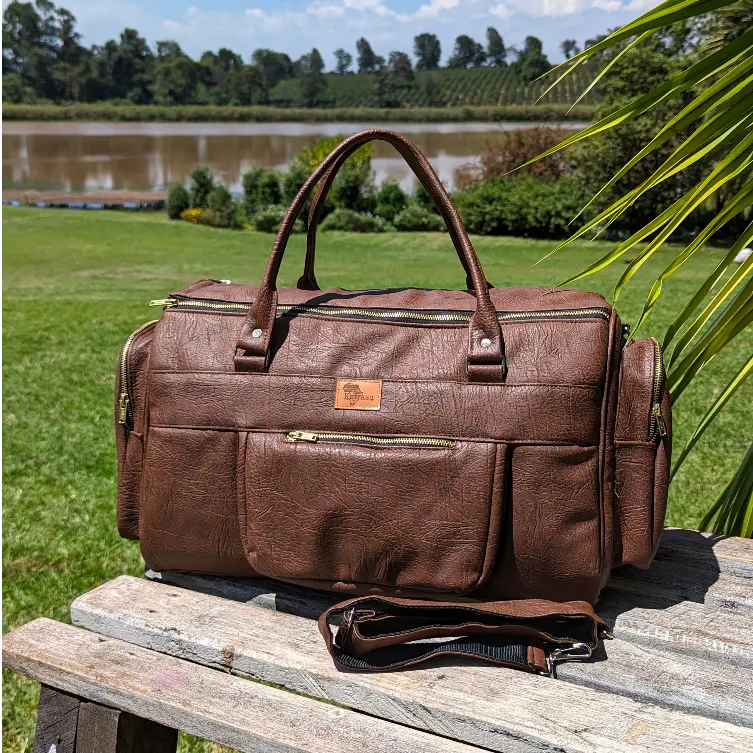
Packing efficiently in a single duffel bag makes travel smoother and less stressful whether you are heading out on a 4-day business trip to Mombasa, embarking on a weekend safari getaway, or visiting family upcountry. Unlike hard-shell suitcases that dictate your storage shape, a soft-sided duffel or weekender bag offers flexible capacity, lightweight handling, and effortless loading into car boots, bus overhead bins, or train racks. However, the open interior of a duffel bag can easily become a chaotic pit where clothes get wrinkled, chargers tangle, and small essentials disappear to the bottom. This practical guide breaks down how to curate a minimalist 3-to-5-day wardrobe, balance weight effectively, and use structured packing techniques to maximise space without overstuffing your bag.
A Summary of How to Pack a Duffel Bag Efficiently
The Gold Standard Duffel Packing Strategy: Pack your duffel in vertical layers and weight zones. Place heavy, dense items (shoes, tech, and toiletry kits) at the bottom near the base. Roll wrinkle-resistant casual clothes to build a compact foundation, lay structured formal garments flat across the top, and store high-frequency essentials in quick-access exterior pockets.
| Duffel Bag Weight & Layer Zones | |
|---|---|
| Packing Zone | What To Pack |
| Top Zone | Folded shirts, blazers & quick-access essentials |
| Middle Zone | Rolled jeans, T-shirts & undergarments |
| Bottom Zone | Footwear, padded tech & heavy washbags |
| Bag Structure | Reinforced base + dual carry handles & crossbody strap |
3–5 Day Essential Packing Matrix
Follow the baseline 3-5 day wardrobe matrix below to prevent overpacking while ensuring you have versatile options for work and leisure.
| Gear Category | 3-Day Trip Quantity | 5-Day Trip Quantity | Recommended Packing Method |
|---|---|---|---|
| Tops / Shirts | 3 Tops (2 Casual, 1 Formal) | 5 Tops (3 Casual, 2 Formal) | Roll t-shirts tight; fold collared shirts flat |
| Bottoms / Pants | 2 Pairs (Jeans/Chinos) | 3 Pairs (Jeans/Chinos/Shorts) | Flat fold or bundle fold along bag length |
| Underwear & Socks | 4 Sets (1 Extra) | 6 Sets (1 Extra) | Tuck inside shoes or fill edge gaps |
| Footwear | 1 Pair Worn + 1 Extra Pair Packed | 1 Pair Worn + 1-2 Extra Pairs Packed | Individual shoe bags placed along base |
| Outerwear / Layer | 1 Jacket or Sweater (Worn during transit) | 1-2 Jackets / Light Sweaters | Lay flat across top of packed layers |
| Toiletries & Tech | 1 Washbag + Compact Tech Pouch | 1 Washbag + Charger / Cable Pouch | Base corners or dedicated side pockets |
Step 1: Choosing the Right Duffel Bag Capacity
Before packing, ensure your weekender bag capacity matches the duration of your trip:
| Duffel Volume Capacity Guide | |
|---|---|
| Trip Duration | Recommended Volume Capacity |
| 1-2 Days (Weekend) | 30L – 35L Capacity |
| 3-5 Days (Medium) | 40L – 50L Capacity |
| 6+ Days (Extended) | 60L+ Capacity |
-
0L to 35L (Short Weekend): Best for overnight stays or minimal 2-day business trips.
-
40L to 50L (Standard 3–5 Day Range): The sweet spot for multi-day travel. It comfortably holds multiple outfit changes, a spare pair of shoes, a toiletry washbag, and a small laptop or tablet without bulging.
-
60L+ (Extended Travel): Ideal for group road trips or long holiday stays, but can become heavy to carry over a single shoulder when fully loaded.
Step 2: Master Space-Saving Packing Techniques
Combining different packing techniques based on fabric type protects garments from wrinkling while utilising every cubic centimetre of interior space.
Packing technique comparison
- Roll: T-shirts, polo shirts, jeans and knitwearSaves space and prevents sharp folding creases
- Flat-fold: structured shirts, suits, blazers and chinosPrevents deep creases and keeps collars in shape
-
Rolling vs. Folding: The Hybrid Approach
-
Roll Casual Clothing: T-shirts, polo shirts, jeans, shorts, and activewear should be rolled tightly into smooth cylinders. Rolling compresses soft fabrics and prevents sharp creases, making it easy to line the bottom and corners of your duffel.
-
Flat-Fold Formal Wear: Button-down shirts, blazers, and dress trousers should be neatly folded flat. Place these flat-folded garments across the very top layer of your packed duffel to minimise friction during movement.
-
Utilise the “Dead Space” Inside Footwear
Footwear occupies substantial space inside a bag. Maximise that volume by stuffing socks, underwear, power banks, or small chargers inside your packed shoes. This keeps the shoe structure from crushing flat while recovering valuable internal packing volume. Always place shoes inside individual shoe bags or lightweight protective sleeves to keep soles from touching clean clothing.
Step 3: Layering Your Duffel Bag for Balance and Access
The key to comfortable duffel carry is proper weight distribution. Packing heavy items to one side causes the bag to tilt uncomfortably against your hip when using the shoulder strap.
Duffel bag layers, from the top down
- Top layerFlat-folded shirts and a weather jacket
- Middle layerRolled jeans, shorts and T-shirts
- Base layerPadded footwear, washbag and heavy tech, resting on the reinforced base
-
The Foundation Layer (Heavy & Dense Items): Lay heavy items flat across the bottom base panel—place your shoe bags on one side and your leak-proof washbag or heavy tech pouch on the opposite side to balance weight.
-
The Core Layer (Rolled Casuals): Pack rolled jeans, shorts, sweaters, and t-shirts tightly together over the base layer to create a firm, structured wall.
-
The Top Layer (Delicate & Formal Garments): Lay folded dress shirts and trousers flat on top.
-
Quick-Access Zones: Place travel documents, phone chargers, hand sanitiser, and house keys inside external zippered pockets or top-level drop slots for instant retrieval without opening the main compartment.
Step 4: Spill Prevention and Toiletry Management
Liquid spills inside a travel bag can ruin clothing and stain interior linings. Protecting your gear requires dedicated leak containment.
Spill prevention, from the outside in
- Water-resistant outer washbag shell
- Double-cap and zip-lock inner sleeve
- Travel-sized sealed liquidsUnder 100 ml each
-
Use Dedicated Toiletry Kits: Never toss loose shampoo, lotions, or colognes into the main duffel compartment. Always use a structured, liquid-resistant washbag.
-
Travel-Sized Containers: Transfer shampoos and lotions into small, flexible travel bottles with secure screw-cap lids. Leave a small air gap at the top of each bottle to account for air pressure changes during transit or regional road travel.
Frequently Asked Questions
Is a 45-liter duffel bag suitable as an airline carry-on?
Yes, most international and domestic airlines accept soft-sided 40L to 45L duffel bags as cabin carry-on luggage, provided the bag’s physical dimensions stay within typical limits (55cm × 35cm × 25cm). Because soft duffels lack rigid plastic shells, they squeeze easily into overhead bins or under-seat spaces when not overstuffed.
How do I prevent my duffel bag from sagging in the middle?
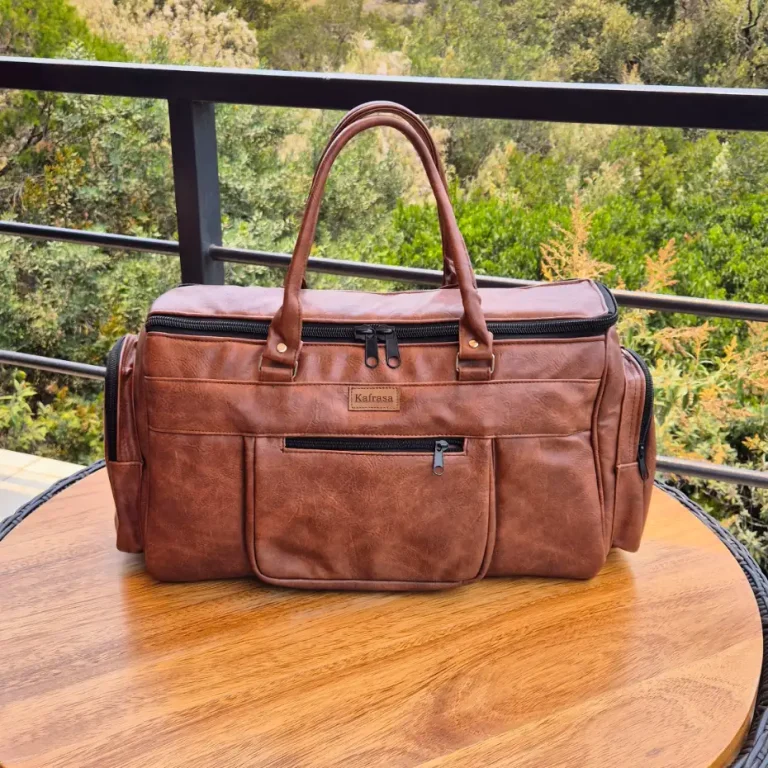
Mid-bag sagging occurs when heavy items are packed in the centre of an unreinforced duffel. Build a rigid base layer using packed shoe bags and structured toilet kits at the bottom to prevent this. Alternatively, choose a handcrafted duffel constructed with a double-lined base board and reinforced synthetic leather floor panels.
Should I choose synthetic leather or canvas for a weekend travel duffel?
Synthetic leather delivers a sleek, water-resistant finish that wipes clean easily—making it ideal for business travel, hotel stays, and rainy weather. Heavy-duty canvas offers a rugged, flexible option that resists scuffs during outdoor road trips and safari travel. Combining canvas with synthetic leather handles or African-print trims provides both durability and style.
Travel Light and Arrive Organised
Packing for a 3-to-5-day trip does not require lugging a bulky suitcase or an overstuffed duffel. With the right bag capacity, a carefully planned wardrobe, and a deliberate packing strategy, a 40–50L duffel or weekender can provide more than enough space for both work and leisure. You can carry everything you need in a single organised bag by selecting a properly sized weekender duffel, balancing weight along the base layer, and combining smart rolling and folding techniques. Roll soft, wrinkle-resistant clothes, fold structured garments flat, use the space inside shoes, and keep liquids securely contained.
Ready for your next weekend trip or business journey? Explore Kafrasa’s range of handmade duffels and travel bags or contact our Nairobi workshop via WhatsApp to request custom dimensions, initial monograms, or personalised material finishes.
Ready to get yours? Every Kafrasa bag is handmade to order in Nairobi in quality synthetic leather, canvas and African print.
- Jumbo Duffel/Travel Bag — Duffels